


How to Play Sans 3D
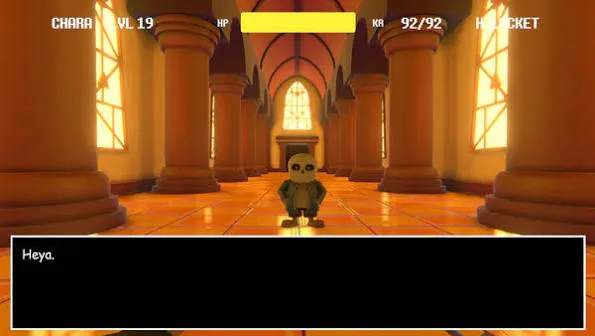
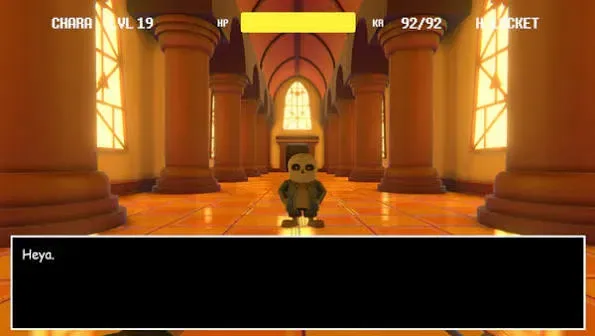
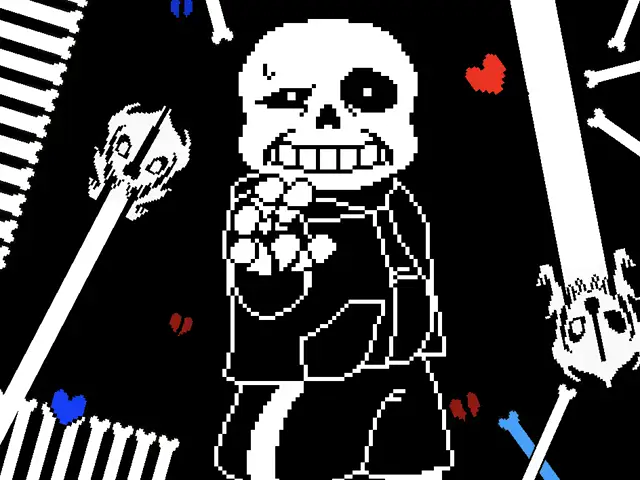
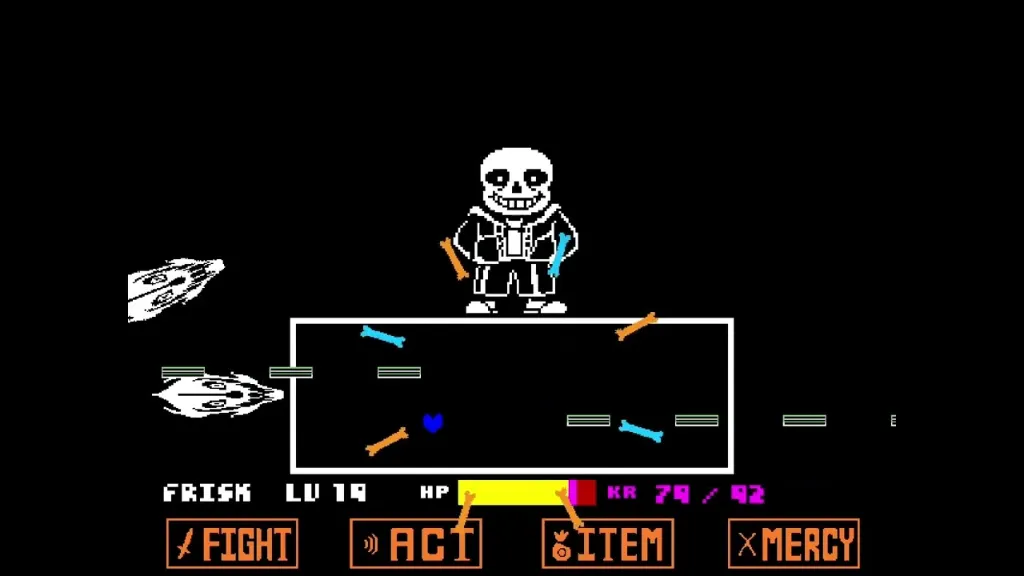
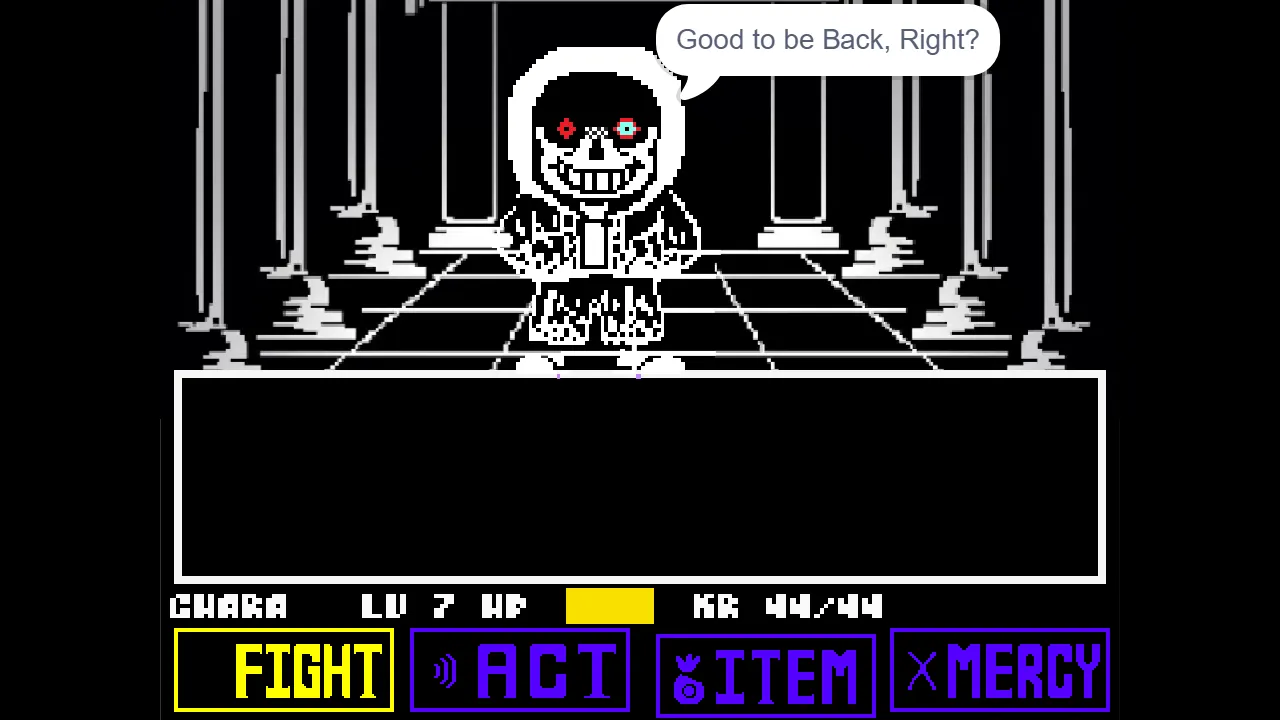
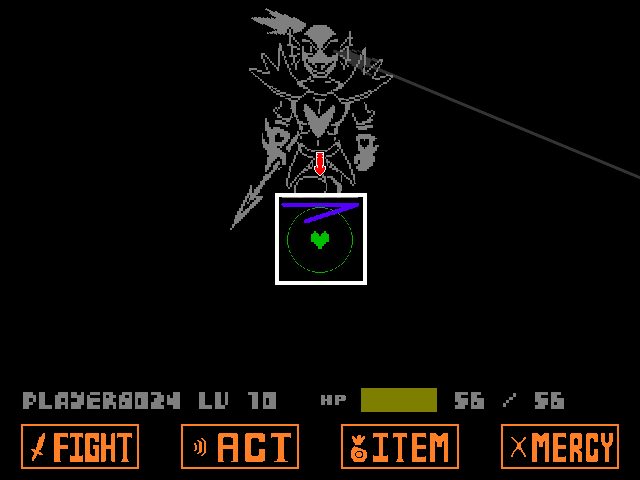
This project is a 3D-styled Sans battle that radically alters the visual presentation of the familiar encounter. The core concept revolves around a perspective-based presentation where the hazards, such as bone attacks and Gaster Blaster style attacks, appear to exist in a simulated three-dimensional space. For the familiar 2D-style encounter, play Bad Time Simulator. Sans 3D Fight instead presents the battle through a different visual perspective, requiring players to completely readjust their understanding of distance and collision. The attacks visually approach through depth and perspective, starting small in the center of the vanishing point and expanding outwards as they theoretically get closer to the player's viewing area. This creates a very different visual experience from a traditional 2D fan game, significantly increasing the difficulty by obfuscating the exact location of the hitboxes.
Players need to re-adapt to distance and attack timing because the visual cues are no longer based purely on horizontal or vertical coordinates. Instead, you must learn how to judge timing based on visual scaling and position. An attack is not an immediate threat when it first appears on the screen; it only becomes dangerous when its size indicates that it has reached the same relative depth as your SOUL. This requires intense concentration, as you must track the rate of expansion of multiple simultaneous projectiles. A slow-moving attack might stay on the screen for a long time, forcing you to remember its position while dodging faster attacks that bypass it in the perspective illusion. Overcoming this visual deception is the primary challenge of the game.
The mechanics of the combat rely on maneuvering your SOUL across the available area to avoid these expanding obstacles. As the bone attacks and other hazards scale up, they occupy specific sections of the screen. Your goal is to position your SOUL in the negative space between these expanding shapes just before they reach maximum size and trigger their damage hitboxes. The difficulty stems from the fact that the safe zones are not always immediately obvious when the attacks first spawn. You have to anticipate where the gaps will be based on the trajectory and scaling rate of the incoming graphics. This predictive dodging style is what separates this 3D-styled encounter from standard reaction-based bullet hell simulators.
The pacing of the battle is designed to thoroughly test your ability to interpret these perspective cues under pressure. The game will often present overlapping patterns where attacks scaling at different rates crowd the screen simultaneously. This visual noise is intentional, forcing you to prioritize the hazards that are visually largest, and therefore closest to your position, while maintaining awareness of the smaller hazards developing behind them. It is a demanding cognitive exercise that rewards patience and a keen eye for subtle changes in size and trajectory. You will likely take damage frequently in your initial attempts as you build the unique muscle memory required for this specific presentation style.
Controls
| Key | Action |
|---|---|
| Arrow Keys | Control the movement of your SOUL across the screen area to navigate between the expanding hazards. |
| Z | Confirm menu selections and advance the dialogue text between the attack sequences. |
About the 3D Remake
This simulator is identified as "Sans 3D Fight! (Full version!)" created by the user akeisman225. It is an important piece of the fan game ecosystem, specifically belonging to the SANS FIGHT 3D remix lineage. This lineage represents a series of community projects where creators iterate upon open-source code to experiment with perspective rendering techniques. It is vital to understand that this project is completely distinct from 3DTale Sans. While both use "3D" in their descriptions, they are entirely different fan creations built on different engines with different interpretations of the source material. This project focuses specifically on applying a perspective transformation to the 2D bullet hell combat, rather than creating an explorable three-dimensional world.
The defining feature of this game is how it answers the question of what "3D" means in this context. It does not mean a free-roaming environment with complex lighting engines. The 3D element is purely manifested in the perspective-based presentation of the attacks. The engine simulates depth by manipulating the size and position of the 2D sprites relative to a central vanishing point. This creates the illusion that the attacks are traveling through depth, providing a unique visual twist on the established combat formula without abandoning the core arcade-style gameplay that defines the genre. The community highly values these creative technical experiments that breathe new life into familiar scenarios.
By shifting the visual paradigm, the creator has successfully manufactured a high-difficulty experience that does not simply rely on increasing the speed or quantity of projectiles. The difficulty is inherent in the presentation itself. It challenges the player's spatial reasoning and their ability to quickly parse complex visual information. This approach to difficulty design has made the game a notable entry within the community, often recommended to players who are looking for a fresh challenge that requires a different set of cognitive skills than standard bullet hell navigation. It serves as an excellent example of how changing the perspective can drastically alter the player's interaction with the game mechanics.
Perspective Challenges
The core gameplay loop centers around a linear progression through the perspective-altered attack patterns.
- Perspective Gauntlet: The primary experience is navigating the sequence of attacks that utilize the scaling depth mechanics. You must continually adapt your dodging strategy as the game introduces variations on the bone attacks and Gaster Blaster style attacks, all presented through the perspective lens. The challenge lies in maintaining your focus and correctly judging the intersection timing of the expanding sprites over the course of the battle. There are no alternative routes; the focus is entirely on mastering the visual interpretation required to survive the encounter.
Because the challenge is tied directly to the visual presentation, there is no way to bypass the learning curve. You must engage with the perspective mechanics directly and build the necessary skills through repeated attempts and careful observation of the scaling rates.
Tips for the 3D Fight
- Focus on Scaling, Not Just Position: Do not just track where an attack is located on the screen. You must primarily focus on how fast it is increasing in size. A large object is an immediate threat; a small object is still developing in the simulated depth.
- Anticipate the Final Size: When an attack begins to scale, try to visualize how much screen real estate it will cover when it reaches its maximum size. Move your SOUL into a position that will remain safe based on that final anticipated size, rather than just moving out of the way of the current small graphic.
- Prioritize Visual Clarity: During overlapping attacks, the screen can become visually confusing. Consciously force yourself to focus on the objects that are visually the largest, as they are the ones closest to triggering their damage hitboxes. Ignore the smaller background objects until the immediate threats are cleared.
- Learn the Scaling Timing: The rate at which different attacks scale may vary. Spend your initial attempts simply observing the speed of the expansion without worrying too much about surviving. Once you understand the timing rhythm of the visual growth, your dodging will become much more consistent.
- Use Deliberate Movements: Frantic dodging is often punished by the perspective illusion. Because hitboxes are tied to the expanding graphics, overcorrecting your movement can easily place you directly into the path of an attack that you misjudged. Make small, deliberate adjustments based on the scaling cues.
FAQ
What is Sans 3D Fight?
It is a fan-made battle simulator that features a 3D-styled, perspective-based presentation, where attacks visually approach through depth by scaling in size, fundamentally changing how you must dodge.
Is Sans 3D Fight actually 3D?
The '3D' aspect refers to the visual presentation and the perspective illusion created by scaling 2D sprites to simulate depth. It is not a fully rendered 3D environment with free-roaming cameras.
Is this the same as 3DTale Sans?
No, it is an entirely different fan project. This specific game is 'Sans 3D Fight! (Full version!)' by akeisman225 and focuses on perspective-based bullet hell combat, distinct from 3DTale.
How is it different from the normal Sans fight?
The primary difference is the visual experience. In the normal fight, attacks move across a flat 2D plane. Here, attacks scale outwards from a central point, requiring you to judge distance and timing based on their visual size.
What are the controls?
You use the Arrow Keys to maneuver your SOUL across the screen area to avoid the expanding hazards. The Z key is used to advance dialogue segments and confirm selections.
Is it an official Undertale game?
No, it is a community-created fan game built independently. It uses themes from the original game but reimagines the mechanics through a unique perspective rendering technique.
Can I play Sans 3D Fight online?
Yes, this specific simulator is designed to be fully playable directly within your web browser on this page, requiring no additional downloads.
Why does the perspective make the fight feel different?
The perspective presentation removes your ability to rely on standard 2D timing. You must constantly analyze the scaling speed of the graphics to determine when an attack is actually dangerous, which adds a significant cognitive load.